
The problem we're solving
Over 70% of SAP implementations fail to meet their objectives. Manual interventions, ticket backlogs, and unmet service levels are widespread across the industry.
Dodge AI is a suite of autonomous AI agents specialized for ERP maintenance and operations, targeting legacy and S/4HANA SAP systems. It provides real-time process mapping, incident analysis, and ticket resolution, handling tasks traditionally managed by large, costly consulting teams.
The platform embeds directly within client ERP ecosystems, combining reasoning, browser automation, and system configuration tools. The system's architecture benefits from recent advances in agentic AI, graph-based reasoning, and process-first automation.
Seeing the system at a glance
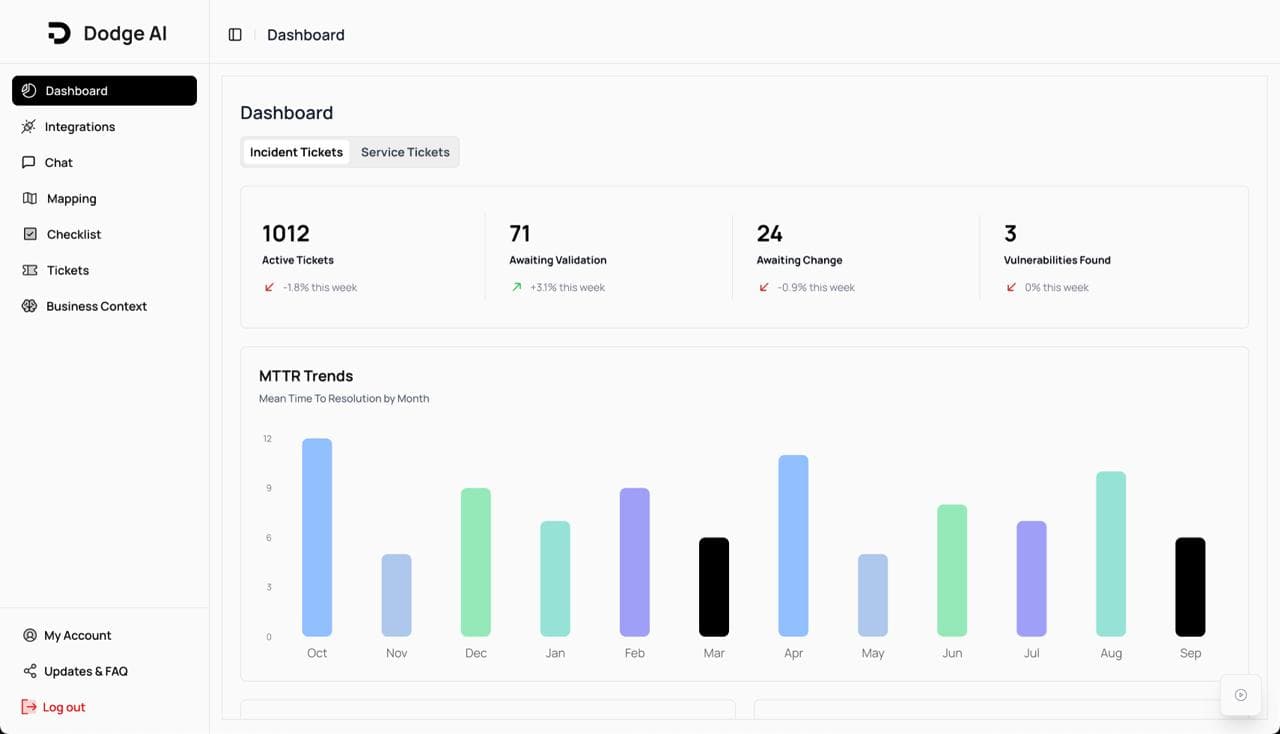
The first thing you notice in Dodge AI is the dashboard. Instead of digging through reports or ticket queues, you get a clear snapshot of your ERP operations:
- Active incidents
- Tickets waiting on validation or change
- Trends in MTTR over time
This matters because trends tell a story that individual tickets never will. A rising MTTR or a growing validation queue usually points to deeper process or configuration issues. The dashboard makes those patterns visible early, before they turn into fire drills.
Bringing SAP and tickets into the same conversation
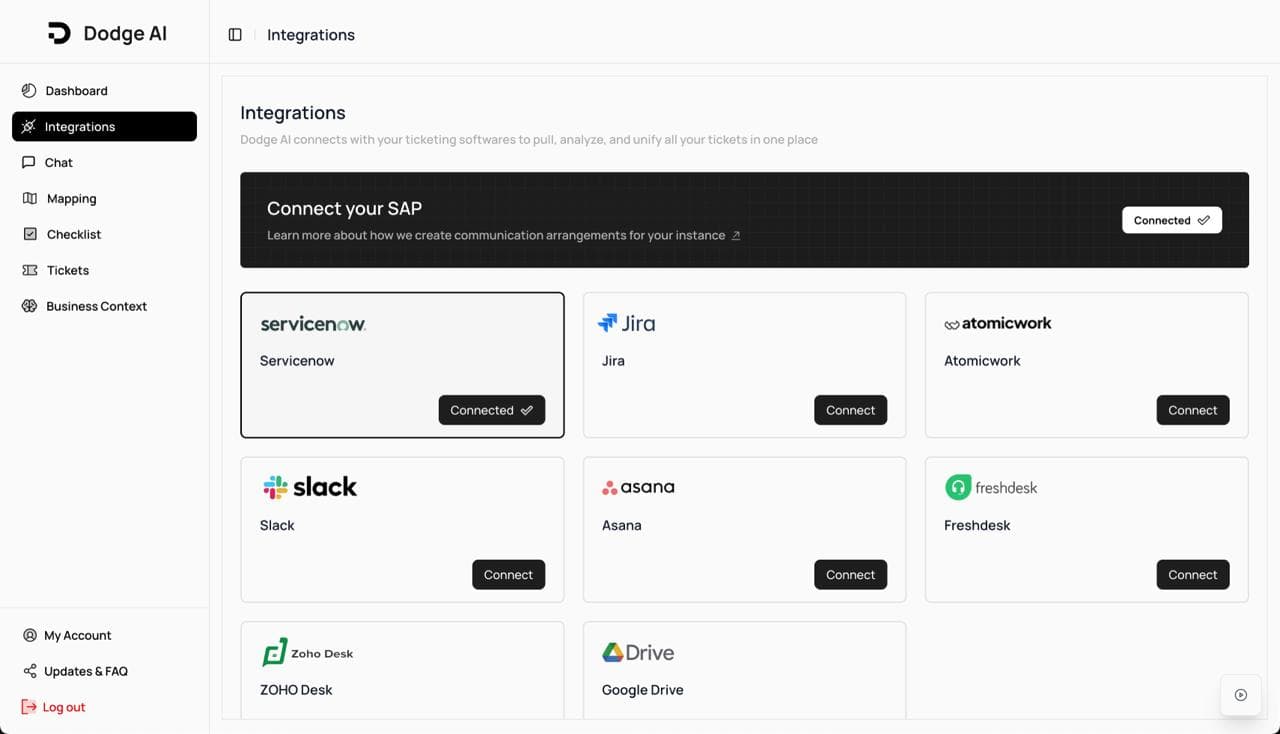
ERP issues rarely live in one system. A user raises a ticket in ServiceNow. The root cause sits in the SAP configuration. The fix depends on understanding a business process that spans multiple steps.
Dodge AI connects to ticketing tools and pulls that data together with live SAP context. Tickets are no longer just text descriptions - they are linked to the processes and system behavior behind them.
This turns tickets into starting points for understanding rather than dead ends. Teams can see what part of the system is involved and how similar issues behaved in the past, instead of relying on memory or guesswork.
Understanding real processes through graph-based reasoning
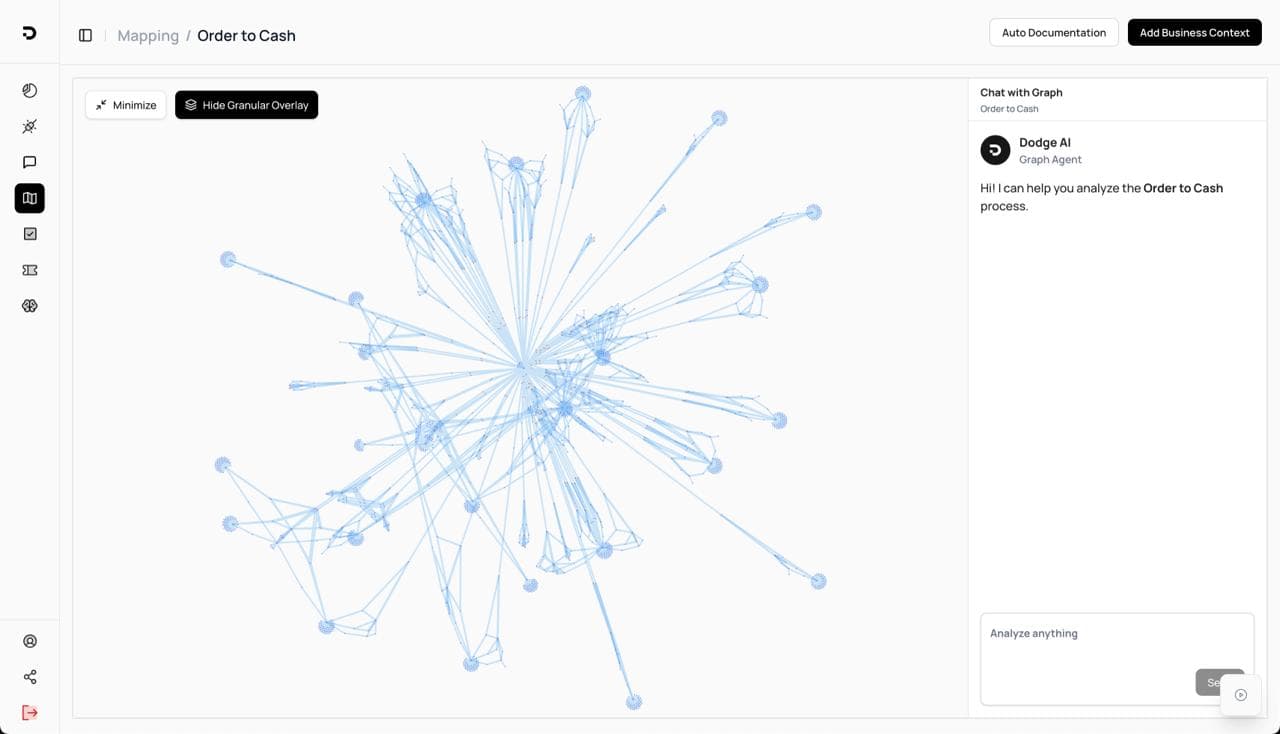
Most SAP documentation describes how processes should work. Dodge AI shows how they actually work.
In the Mapping view, you can explore processes, such as Order to Cash, as they currently exist in your system. You see the connections, the variations, and the points where things commonly break.
You can then ask the agent specific questions about those steps:
- Where do incidents usually start?
- Which configurations influence a handoff?
- Why does a particular path keep failing?
This turns process understanding into something practical, not theoretical.
Executing tickets with context, not guesswork
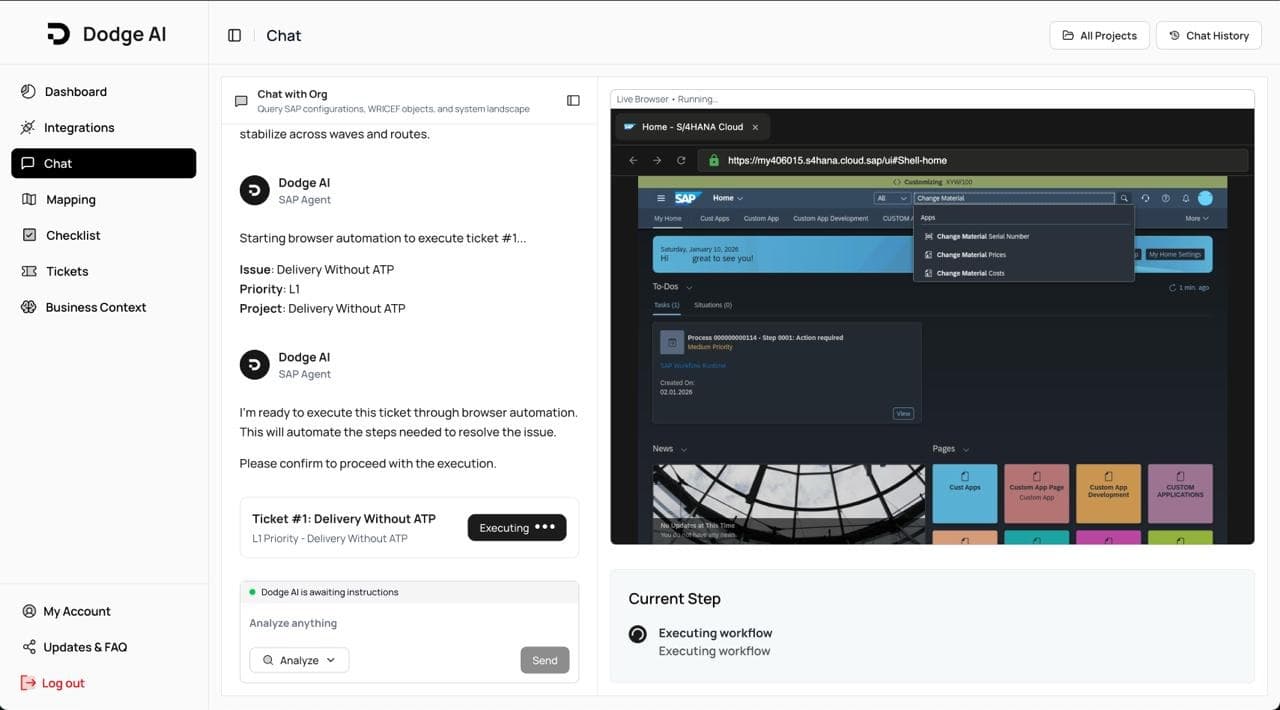
In Dodge AI, tickets can move from understanding to execution in the same flow. The agent first gathers context from the system, the process, and similar past issues. Only once that picture is clear does it step into execution.
You can see what the agent is doing as it works through the steps, and you can chat with it along the way. Ask why a particular action is being taken, add clarifications, or adjust the approach if needed.
This turns ticket resolution into a guided workflow rather than a manual hunt across screens and transactions. Routine fixes become faster, and complex issues become easier to reason about because the context is always in view.
From ticket handling to meaningful progress
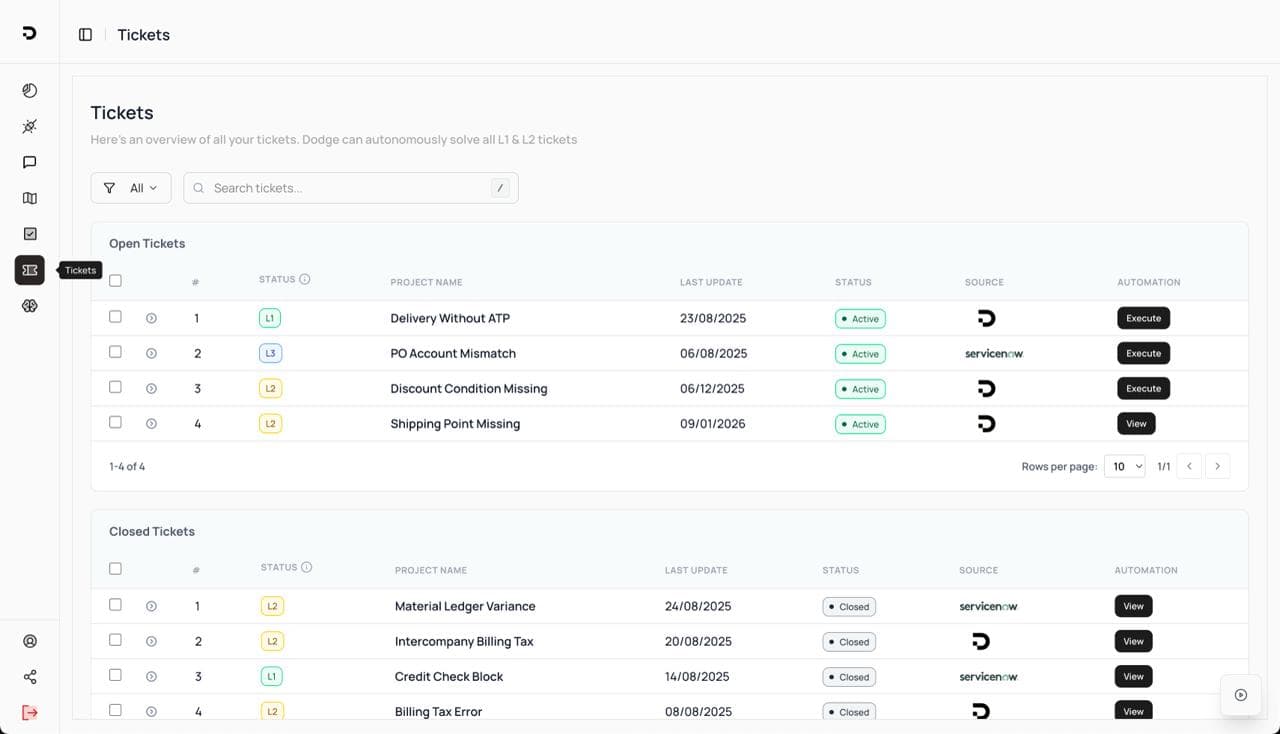
On the Tickets page, Dodge AI helps you analyze what is open, what is pending, and what has already been resolved. More importantly, it enables you to act.
For many common issues, the platform can guide or execute resolution steps directly. Work that used to take hours of investigation can often be handled far more efficiently.
The impact is simple: Less time spent chasing repetitive issues. More time available to improve processes, prevent future incidents, and support the business where it actually matters.
Rethinking how ERP systems are supported
Dodge AI is not about adding another AI tool to your stack. Manual interventions, ticket backlogs, and unmet service levels are widespread across the industry.
Dodge AI disrupts this by vertically integrating AI-powered process understanding - reducing reliance on expensive consultants, slashing incident backlogs, and dramatically improving system reliability and user satisfaction.